Roads are unkind to paint. Sand and shell fragments on coastal highways, aggregate kicked up from construction zones, winter road grit, even the subtle abrasion from highway airflow all leave their mark. Full-body paint protection film, or PPF, shields against that grind, but a well planned partial kit can deliver most of the protection for a fraction of the material and labor. The trick is to prioritize the zones that take the beatings, choose the right film, and install it in a way that looks intentional rather than compromised.
Where the damage happens first
Every vehicle develops a signature pattern of wear. Spend a week inspecting cars in a busy auto detailing bay and you notice the same hot spots again and again. The leading edge of the hood shows peppering, the bumper cover looks like it met a bag of gravel, and the lower doors are splotched with micro chips behind the front wheels. Mirrors collect pits along the outer corners. Rocker panels, especially on SUVs and trucks, look sandblasted after a single off ramp during resurfacing season.
The physics are simple. Tires sling debris rearward at a low angle, so the rocker faces and lower door skins absorb the impact. Airflow over the hood accelerates the contact of fine grit. Protruding shapes like mirror caps collect hits at their outside edges. Even if you drive mostly city miles, lane changes at speed and truck-following distance ensure your front fascia and hood shoulders see plenty of abuse.
A smart partial PPF kit answers this reality by wrapping the forward half of the hood, front bumper, mirror caps, headlight lenses, the leading edges of the fenders, and a band along the rocker panels. For many daily drivers, adding a narrow strip behind each wheel arch pays dividends. Sports cars with wide tires may deserve extended rocker coverage that runs into the lower quarter panel.
Partial PPF, done right, does not look “partial”
Skeptics worry about a visible line across the hood or edges that collect dirt. Both concerns are ceramic coating fixable with planning and technique. The best installers align the hood break with a natural body line when possible, then extend the film over the edge and into seams so the line reads like a design feature rather than a hard stop. On flatter hoods with no convenient crease, a 18 to 24 inch panel can still look clean if the edge is machine cut, properly tacked, and post heated to prevent lift. When the film is high quality and the paint has been prepped through responsible paint correction, the transition nearly disappears at normal viewing distance.
A tidy install also relies on restraint. Overstretching film into sharp recesses invites future failure, especially with ceramic-coated surfaces that reduce initial tack. Preheating the panel, relying on plotter-cut templates where they make sense, and hand trimming only when the template compromises coverage makes a difference. Good work looks like it grew on the car.
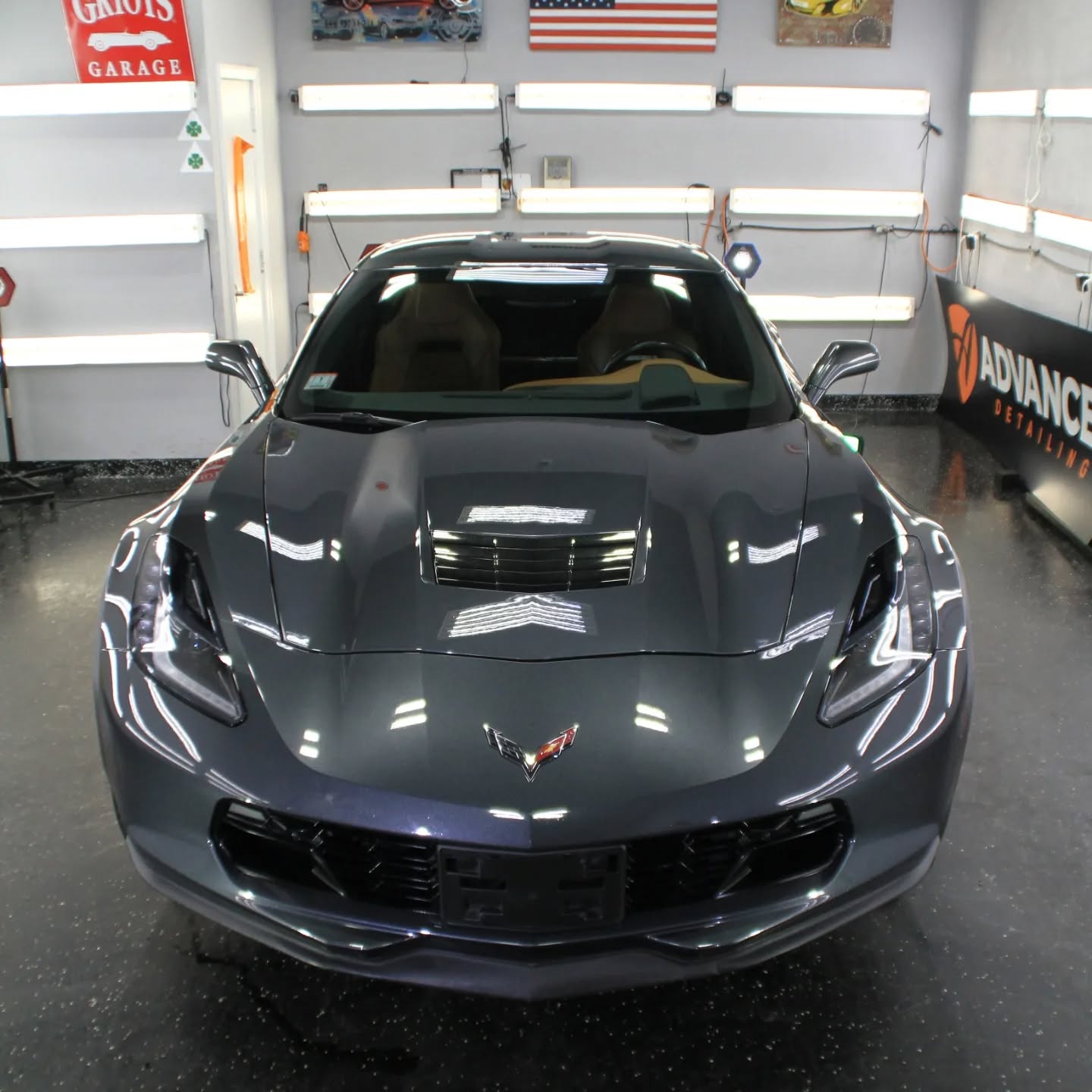
The case for partial kits over full wraps, from a working bay
There is no single right answer for every car. In a perfect world, every front end would get a bumper-to-pillars wrap, rockers would be protected to the pinch weld, and the roof’s leading edge would be sealed against bug etching. In practice, owners make decisions that weigh cost, risk tolerance, and length of ownership.
At Advanced Detailing Sofla, a car detailing company in Pompano Beach, FL, we regularly see commuters who plan to keep a car for three to five years and want to avoid the most visible chips. A partial kit aimed at high-impact zones keeps their paint intact where it counts. When the lease ends, they return a car that photographs well and avoids the ding of reconditioning charges. Weekend track drivers usually go further, wrapping the entire front clip, but even they often choose partial rockers if the car has factory stone guards.
The numbers help frame the choice. Depending on vehicle size and film brand, a full front clip can use two to four times the film of a partial hood, bumper, and mirrors package, and complex bumpers can double the install time. If your highway miles are modest and you rarely draft behind trucks, that extra material might not yield a proportional benefit. On the other hand, a daily 50-mile round trip behind construction traffic makes the full setup easier to justify.
Material matters more than marketing
PPF is not a commodity. Film thickness, topcoat chemistry, and adhesive formulation vary widely. The common benchmark is an 8 mil base with a self-healing elastomeric topcoat. Some brands push to 10 mil for extra puncture resistance, helpful on trucks and SUVs that see gravel. Others focus on low orange peel and optical clarity, an aesthetic win on dark colors where texture telegraphs.
Adhesives make or break a partial kit. Strong initial tack helps complex bumpers stay put during squeegee work, but excessive aggressiveness can lead to silvering along edges, especially on porous repaints. A balanced adhesive that allows repositioning and then locks down cleanly is worth paying for. In an auto detailing environment where vehicles often arrive with residual waxes, spray sealants, or ceramic coating overspray, predictable adhesives save hours.
The self-healing topcoat should shrug off swirls from routine car washing. Heat from the sun or warm water coaxes out minor marring. Not all self-healing claims are equal, so installers often test swatches with microfiber and light pressure to see how fast the film rebounds. If a brand takes minutes of heat or leaves ghosts, it might be better suited to a full wrap, where edge exposure is lower, than a partial kit that relies on stable, clean edges.
Prep is protection: paint correction before film
PPF locks in whatever is underneath. If the paint has wash marring, bonded contaminants, or a dull haze from dealership buffing, the film will preserve those flaws for years. Thoughtful prep is not about vanity, it is about longevity. A clean, corrected surface helps film adhere more uniformly and reduces the tendency for edges to lift as solvents outgas.
The typical process blends car detailing and paint correction. After a thorough wash and chemical decon to remove iron particles, a clay treatment smooths the surface. On new cars, a single polishing stage often suffices to remove light marring and dealer installed defects. Older vehicles or soft paints may need a two-step compound and polish. The goal is not show-car perfection at all costs, it is a crisp, defect-light finish that reads clearly through the film.
Where ceramic coating is part of the plan, the sequence matters. Apply PPF first, then coat film and exposed paint together. Coating under film can compromise adhesion. Coating over film helps with maintenance, reduces water spotting, and keeps wash-induced friction low. We see the best outcomes when owners treat PPF and ceramic coating as a system, not a rivalry. Each solves a different problem. PPF stops impact damage. A coating simplifies cleaning and adds chemical resistance.
Advanced Detailing Sofla’s partial PPF playbook
Years of hands-on work have taught some repeatable patterns. On most sedans, a partial hood that reaches to the midpoint or a natural contour line keeps road rash away from the viewing field of the driver. Fender tips receive a template that carries two to four inches past the headlight seam. Mirror caps get full coverage, even on cars with built-in turn indicators. Bumpers vary wildly, so we often mix plotter-cut templates for the main planes with hand-relief cuts inside tight fog light bezels to avoid overstretch. Rocker coverage usually runs from the front wheel opening to the midpoint of the rear door and lifts only at the body seam, where a hidden edge can be wrapped.
In our Pompano Beach climate, we account for heat cycle expansion. Panels parked outside all day see high surface temperatures. Post heating edges and tension points, rather than just relying on a single squeegee pass, prevents micro lift that would later collect grit. Vehicles with textured plastics next to painted surfaces, common on crossovers, benefit from edge sealers at micro gaps to prevent contamination wicking under the film.
Why Advanced Detailing Sofla favors strategic coverage
Budget should not be the only driver, but it is honest to treat coverage like insurance. We map the first 10 to 15 percent of the car that takes 80 percent of the impact. That means the immediate blast zone: bumper, hood edge, fender tips, mirrors, and rockers. Trucks add lower door skins and the bottom of the A pillar. Low-slung sports cars get the windshield header and the area just ahead of the rear fender opening to stop tire sling. When owners understand the pattern, they make sharper choices. They see why a full roof is nice to have, while a two-inch band along the roof’s leading edge solves the bug acid pitting that actually occurs.
Advanced Detailing Sofla on edge work and seams
Nothing gives away PPF faster than dirty edges. We chamfer corners to reduce the tendency to lift, avoid stacking edge overlaps where water pressure can find a path, and wrap into seams when there is room without jamming. On white cars, we take special care to remove installation gel from seams and blow dry edges, since residue can dry tan and show. If a panel has a tight rubber seal, like the base of a windshield cowl, we plan the cut to sit a controlled distance away rather than cramming the film under the seal, where it will scuff and deform.
The interplay with window tinting, coatings, and ongoing auto detailing
Vehicles are systems. Window tinting changes how the cabin bakes in the sun, which in turn influences how hot adjacent body panels get. Ceramic coating changes wash behavior, which reduces the swirl pressure against un-filmed paint. Good auto detailing service integrates these parts so owners do not fight their protection package.
A typical sequence that works: complete the wash and decon, correct the paint, install PPF on the chosen zones, apply a ceramic coating to film and paint together, then handle window tinting once the exterior work is stable and free of overspray risks. If tint goes first, take care when removing door panel seals so you do not snag fresh film at door edges.
Maintenance matters, too. PPF resists impacts, but it is not bulletproof. Harsh alkaline cleaners can haze the topcoat. Aggressive wash mitts can micro mar the surface even if it self heals later. A pH-neutral shampoo, soft mitt, and clean rinse keep the film looking new. For areas that see constant abrasion, like the upper rocker where shoes brush getting in and out, a periodic hand application of a silica sealant on top of the PPF reduces friction and the appearance of scuffs.
Color and finish influence what you notice
Owners of black and deep blue vehicles obsess over swirl marks and orange peel texture. They may prefer a film with exceptional clarity and low texture, even if it is not the thickest option. White, silver, and tan owners worry more about dirt lines and bug staining. They benefit from a topcoat that resists yellowing and cleans easily, and from careful edge sealing. Matte and satin factory paints add another layer. They cannot be polished, so PPF is almost mandatory. Partial coverage is trickier on matte finishes, since a gloss line along a hood edge is obvious. For matte cars, consider expanding partial kits to whole panels so texture matches across breaks.
The realistic lifespan of a partial PPF kit
Film makers quote warranties that range from five to ten years, usually against yellowing and cracking. Real-world replacement cycles depend on environment and mileage. In the Florida sun, a high-quality film on a garage-kept car can look great at year seven. On a work truck parked outside, front bumper film might be ready for a refresh in three to five years. The beauty of partial kits is modularity. You can replace the bumper and leave the hood edge and mirrors alone if they are still pristine.
Minor damage repair is easier than many think. A shallow scuff that does not cut through the film often disappears with a warm rinse or brief sun exposure. If a stone pierces the film and leaves a small crater, replace just that panel. Because partial kits stop at natural seams or carefully planned lines, you do not chase film under fenders or into A pillars for a simple fix.
Addressing common objections with practical examples
Some owners worry that a partial hood will show a dirt line or that wax will build at the edge. In practice, a light hand-polish along the film edge every few months, paired with a sealant application, keeps the transition invisible. We have cars with 30,000 highway miles that still present a clean break if the owner follows a thoughtful wash routine.
Another objection is the fear of mismatched gloss. Good films track gloss well, but panels vary from the factory. If your hood has more orange peel than your fenders, the film will not correct that. It can, however, even the refractive look slightly thanks to the topcoat. The best approach is a frank talk before the install, a quick observation under consistent lighting, and choosing where to place breaks so the eye does not dwell there.
When full coverage makes more sense
Some use cases stretch beyond what a partial kit can endure. If you take frequent road trips on chip-sealed highways or spend time on canyon roads in convoy, the upper hood and A pillars will see hits. If your commute sits behind gravel trucks, the windshield header and roof’s leading edge deserve protection. Convertibles with short windshields often look sandblasted across the cowl after a few seasons. For these patterns, a full front clip or added bands at the roofline pay off. The rule is simple: match coverage to exposure, not to a blanket formula.
A short, practical checklist for planning a partial PPF kit
- Walk the car under bright, angled light and mark existing chips and scuffs to identify its wear pattern. Decide on coverage by panel: bumper, hood edge, fender tips, mirrors, rockers, headlight lenses, wheel arch strips. Choose film based on your priorities: clarity for dark colors, extra thickness for trucks, strong adhesives for complex bumpers. Schedule paint correction appropriate to the vehicle’s condition, then install film, then apply ceramic coating to film and paint together. Review maintenance: wash method, products to avoid, and how to handle film edges during detailing.
A recurring lesson from the bay floor
We once protected two nearly identical sedans that left on the same week. Both received partial kits on the front and rockers. One owner washed weekly using safe two-bucket technique and a gentle shampoo, and he avoided drive-through brushes. The other relied on a gas station wash. After 18 months, both cars had intact paint beneath the film, but one film looked like new while the other carried dullness from harsh detergents. Protection is a partnership. The install handles the big hits, maintenance handles the small accumulations.
How partial PPF plays with long-term ownership
If you plan to own a vehicle for a decade, a partial kit can still be the right opening move. Replace high-wear panels as needed over time. Add coverage if your driving pattern changes. Layer a ceramic coating on film and paint to make washing less abrasive. Keep up with periodic professional auto detailing to deep clean seams and inspect edges. Owners who treat protection as a living plan, not a one-time event, tend to drive cars that look fresh long after their peers fade.
Advanced Detailing Sofla has learned to revisit clients’ cars once a year, remove any trapped contaminants along the edges with safe solvents, and recondition the film surface with a topper compatible with the ceramic coating below. Those small touches prevent the slow buildup that otherwise draws the eye to the film line. It is not glamour work, but it pays off every time a client steps back and sees a front end that reads clean and uniform.
Final thoughts from the installer’s side of the squeegee
Partial PPF kits succeed when they respect how a car collects damage. They protect the zones that work the hardest without pretending that every square inch needs armor. They depend on clean prep, smart film choices, tidy edges, and realistic expectations. They pair well with window tinting and a ceramic coating as part of a larger care plan. They are not a compromise so much as a focused solution.
If you prize the look of a crisp front end, want to keep mirrors and rockers from sandblasting, and value a factory-like appearance, a well executed partial kit is a seasoned answer. On some cars it will be the final word. On others, it becomes the first chapter in a long-term protection story. Shops that live with these cars, places like Advanced Detailing Sofla that see patterns repeat week after week, learn to guide owners to the coverage that matches their roads and routines. That is the heart of good auto detailing work, turning thousands of small technical decisions into something you do not notice when you walk up to your car, except for the fact that it still looks like it should.